

What is kombucha?
Kombucha (kahm-BOO-chuh) is a fermented tea drink that probably originated in ancient China over two thousand years ago. The active culture which transforms the tea into kombucha is a complex Symbiotic Culture (or Colony) of Bacteria and Yeast which is held together in a thick, gelatinous polysaccharide matrix biofilm. That’s a mouthful, so it’s commonly referred to by its acronym– SCOBY (SKOH-bee). It is rubbery and slippery, resembling the texture of a squid. It may also be called a kombucha mother, pellicle, zoogleal mat (impress your friends!), biofilm, or mushroom (although that is not quite accurate, because even though the yeast that comprises the colony are in the fungus family, they are not mushrooms).


Fermenting Containers
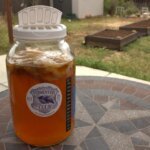
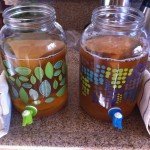
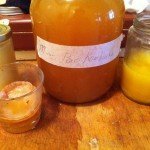
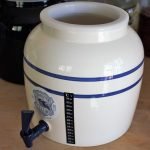
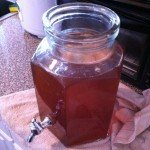
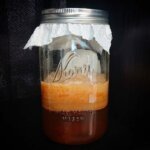
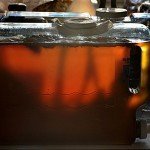
When looking for a fermentation vessel in which to make kombucha, select a non-porous, non-metallic material. Glass or ceramic work best. Plastic is okay (I occasionally use large beer brewing buckets), but some people prefer to avoid all plastic when fermenting. The SCOBY organisms need air. The wider the container, the bigger the SCOBY can grow. When considering the diameter of a vessel, think Texas, not Manhattan.
Brewing Safely and pH
pH, is one (but not the only) measure of the acidity of a substance. Beverages such as kombucha need to have a pH of 4.6 or lower (determined by the U.S. FDA) in order to be safe to consume (i.e., keeping pathogenic microbes out of the brew). When you start your brew, sweet tea has a pH of about 5. In order to make the brew safe (that is, less prone to pathogenic microbes), you need to decrease the pH (that is, make it MORE acidic) to at least 4.6 at the beginning of the fermentation. That’s why it’s important to add mature kombucha to the starting tea. Once fermentation starts, the pH will continue to lower.
The pH of finished kombucha should be around 3 to 3.5. The longer you let it ferment, the lower the pH. At some point, when all the sugars are converted to organic acids, and it tastes like vinegar, kombucha usually settles on a pH of around 2.7. If you’re brewing at home, you can use pH strips to measure pH. It’s not super precise– if you’re brewing commercially or want more accuracy, you will need a pH meter. pH meters come in all price and quality points. I opt for a handheld unit that also measures temperature (and adjusts pH automatically based on temperature). That’s not to say that you need to measure each batch. As long as you are adding your cup of mature kombucha or so per gallon of sweet tea, you should be in the correct pH range.
Technique and Recipe
Kombucha
Equipment
- 1 one-gallon/4L or larger glass jar or ceramic container preferably with spigot at bottom, but not essential
- Bottles to hold secondary ferments; pint-,quart-, or half-gallon sized-- bottles with tightly sealable caps, such as growlers, recycled mineral water bottles, or Grolsch-style swing-top bottles
- Swatch of cloth to cover the opening-- dish towel, tea towel, or paper coffee filter to cover the container's opening (not cheesecloth--flies can get through!)
- large rubber band or twist ties
- funnel for bottling
Ingredients
- 3 liters (100 fl. oz) filtered water
- 6 bags (6 teaspoons or 12 grams loose-leaf) tea- any combination black, green, white, oolong, or pu-erh
- 160 g 7 fl. oz./160 ml raw or white sugar
- 1 SCOBY kombucha culture, 125g or 4 oz or larger by weight
- 250 ml (1 cup) mature kombucha
- Optional Flavorings (e.g. berries, fresh fruit, fruit juice, coconut water, herbs, ginger, etc.)
Instructions
Brew Tea
- NOTE: You want the new SCOBY to form as large in diameter as possible. It forms at the top of the liquid, so if you're using a one-gallon container, be sure you fill the container only to the widest part (i.e. lower than the shoulders or neck of the jar).
- Boil 1 quart/liter of filtered water (in a tea kettle or 1-gallon or larger pot).
- Add tea bags (or if using loose tea, add tea to muslin bags or tea ball) to pot.
- Pour boiling water into pot. Let tea steep for 30 minutes.
- Remove tea bags from pot. Add sugar and stir to dissolve.
- Pour remaining (cool) filtered water into pot. Wait until the temperature drops to 100°F/38°C or below.
Make Kombucha and Ferment
- Dispense tea into the glass or ceramic fermentation container.
- With tongs or clean hands (soaked in vinegar), carefully place the SCOBY into the tea. Add the mature kombucha (liquid the SCOBY was sitting in) to the container.
- Cover with a cloth and secure with a rubber band. Store in a dark, well-ventilated area (keep out of direct sunlight). If using a transparent container, wrap a towel around it to minimize light.
- Fermentation temperature should be between 72°F-84°F or 22°C-29°C. Use a seedling mat to increase temperature by a few degrees if it is cooler than that, or ferment on the top of a refrigerator where it is slightly warmer.
- Give it some good vibes, and your newly created universe will prosper!
- Taste a bit after 7 days by dispensing some from the spigot. If using a container without a spigot, gently insert a straw into the jar (pushing the SCOBY aside). If it's too sweet, let it ferment longer. If you like the taste, it's ready for secondary fermentation and bottling (see next section). If you don't plan on a secondary fermentation, then move it to the fridge (to stop further fermentation) and enjoy!
- If it's too tart, then adjust the time next batch. If it's WAY TOO TART, then you can use it as vinegar.
Flavoring & Bottling (aka Secondary Fermentation)
- Add herbs and juice to clean glass bottles (with either a swing top or one with a tightly sealable cap.) Use ratio of 1:16 fresh juice to kombucha (1 ounce juice per 16 oz. kombucha). Use roughly 1 teaspoon (5ml) dried herbs per 16 oz. kombucha.
- Top with plain mature kombucha. Leave no more than 1/2" of head space in the neck of the bottle. Close tightly.
- Ferment bottle(s) at room temperature for 1-7 days, “burping” the bottles over a sink every day to relieve excess pressure that may build up. Be careful when opening bottle! Contents will build up pressure. If a bottle is very feisty with built-up carbonation, chill it to relax some of the carbonation.
- Move to refrigerator and enjoy (or swap with your fellow Fermenters)!
- Serve chilled. Enjoy in moderation.
Secondary fermentation (aka “Flavor Time”)
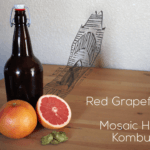
After the primary fermentation, flavoring and bottling (aka the secondary fermentation) is when you can really get creative with your ‘booch! You can use any combination of fresh fruit, fruit juice, veggies, ginger or other herbs and spices. Remember: a little goes a long way, but you should still play around with the quantities needed to achieve the desired level of sweetness or strength. Some ingredients will lend more carbonation. To maximize carbonation, keep the bottles within the range of 76-80F. An inexpensive seedling mat (affiliate link) used in gardening works great– it’s waterproof and can give you the few extra degrees you need when it’s cold in your room.
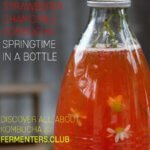
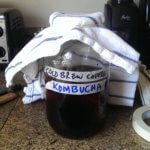
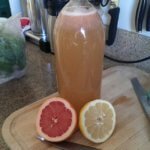
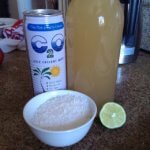
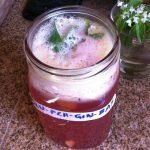
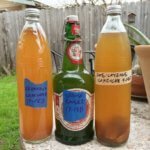
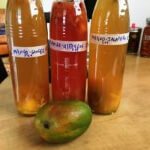
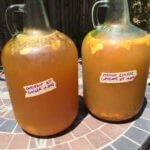
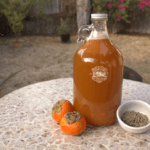
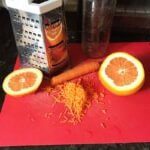
Kombucha Flavor Gallery
Also check out our 72 Seasonal flavors for inspiration!
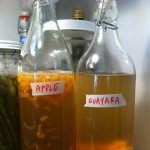
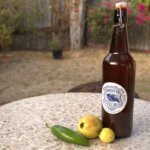
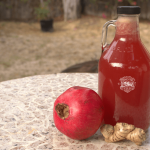
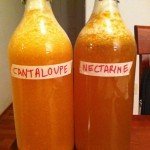
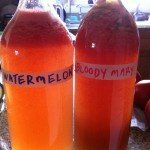
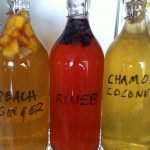
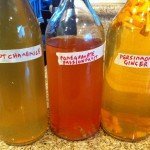
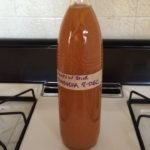
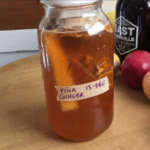
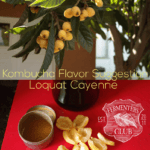
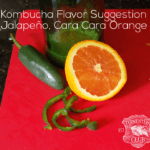
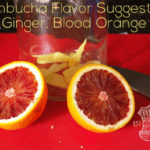
Maintenance
Keeping Flies away
You can craft a simple fly trap to lure vinegar flies away from the good stuff.

Read more about flies and kombucha here.
Where to get a SCOBY
- Us! We now sell kombucha SCOBY’s, shipping within the United States
- Online: I got my original culture from Kombucha Kamp and love it! It has made dozens of babies. They ship nationwide, too (Disclosure: I am an affiliate for Kombucha Kamp, meaning I get a small percentage of sales made if you click these links and buy from them).
- Craigslist or local classified ads- People are often giving them away
- Ask for one on our Facebook page (indicating where you are located). Chances are other Fermenters in your area will be happy to give you one.
Storing SCOBY babies/Taking a Break
If you decide to take a break from making kombucha, or you have extras (because a new SCOBY is made each time you make a batch), you can store your SCOBY (always at room temperature– never in the refrigerator!) in a little of the reserved liquid from the last batch you make. It doesn’t need much to survive, just enough to keep it wet. You can even build a SCOBY hotel by adding multiple cultures to a single container into a “hotel”, like so:

How much should you drink?
Kombucha, like any other fermented food, should be taken in moderation. While it is good for us (being a much healthier alternative to soda drinks), it is acidic, which can upset your stomach. It also contains sugar and caffeine (although it is believed the SCOBY consumes most of the caffeine, leaving about 1/4 the amount in an equivalent portion of brewed tea). There can be “too much of a good thing.” I’ve read that 4 to 8 ounces, twice a day (for a max daily intake of 16 ounces/2 cups/500 ml) is a safe limit. Personally, I only drink max 8 ounces/250 ml a day (and not every single day). You’ll have to experiment and pay attention to your own body, and as always, Trust your Senses.
Ready to learn more? Take one of our classes!
-
Sale!
![[San Diego] Hands-on Kombucha Workshop | Sun. March 8, 2026](https://fermentersclub.com/wp-content/uploads/2017/10/strawb-cham-closeup-e1508165064908-300x300.jpg)
[San Diego] Hands-on Kombucha Workshop | Sun. March 8, 2026
Price range: $79.00 through $146.00 Select options This product has multiple variants. The options may be chosen on the product page -
Sale!

Fermenters Club® Academy Course Gift Certificates
Price range: $18.00 through $179.00 Select options This product has multiple variants. The options may be chosen on the product page -
![Kombucha Master Class [Gift Voucher]](https://fermentersclub.com/wp-content/uploads/2019/10/kombucha-workshop-badgeround-300x290.png)
Kombucha Master Class [Gift Voucher]
$49.00 Add to cart
Here’s a preview of the self-paced Kombucha Master Class through Fermenters Club Academy. It’s the next best thing to being at our live workshops!

Author and founder of Fermenters Club. I’ve been fermenting food for 14 years.
In 2024, I published my first book, Fearless Fermenting.
When not stuffing things into jars, I enjoy permaculture gardening, cooking, yoga, writing, and studying cosmology and esoteric traditions.
Pingback: 72 Seasonal Kombucha Flavors | Fermenters Club
Pingback: High-Alcohol Water Kefir | Fermenters Club
Pingback: Kombucha Calculator – Fermenters Club
Pingback: Cannabis Kombucha | Fermenters Club
Pingback: Hoppy Hazy Kombucha | Fermenters Club
thanks for such helpful information. i have a large glass jar that i would like to use to make larger batches of kombucha. but the spigot is metal (or brass to be exact) and i read once that the kombucha should not come in contact with metal of any type. but i noticed that first image on this post uses the exact same glass jar that i have. am i missing something?
thanks again!
MJ
When you say bags of tea, is that cup size or quart size? You are dealing with almost a gallon of water?
A teaspoon-size tea bag is for one cup. I like to brew mine weaker than I would tea. HOWEVER, I did update the amounts because that did seem a little light for one gallon. I usually use 9 teaspoons of loose tea per gallon of water. (Loose tea by volume is lighter than tea bags which are ground much finer). Good catch, Oriana!